
Quick answer: The easiest way to teach the alphabet to a child aged 3 to 6 is one letter a day for 26 days. Say the letter, hear its sound, find something that starts with it, then color a page that shows the capital and small letter together with a matching picture. It takes about 10 minutes a day and needs nothing more than a printer and a box of crayons.
This guide gives you a complete 26-day letter plan, a simple daily routine, tips for each age, and a free printable ABC coloring book with one page for every letter from A to Z.
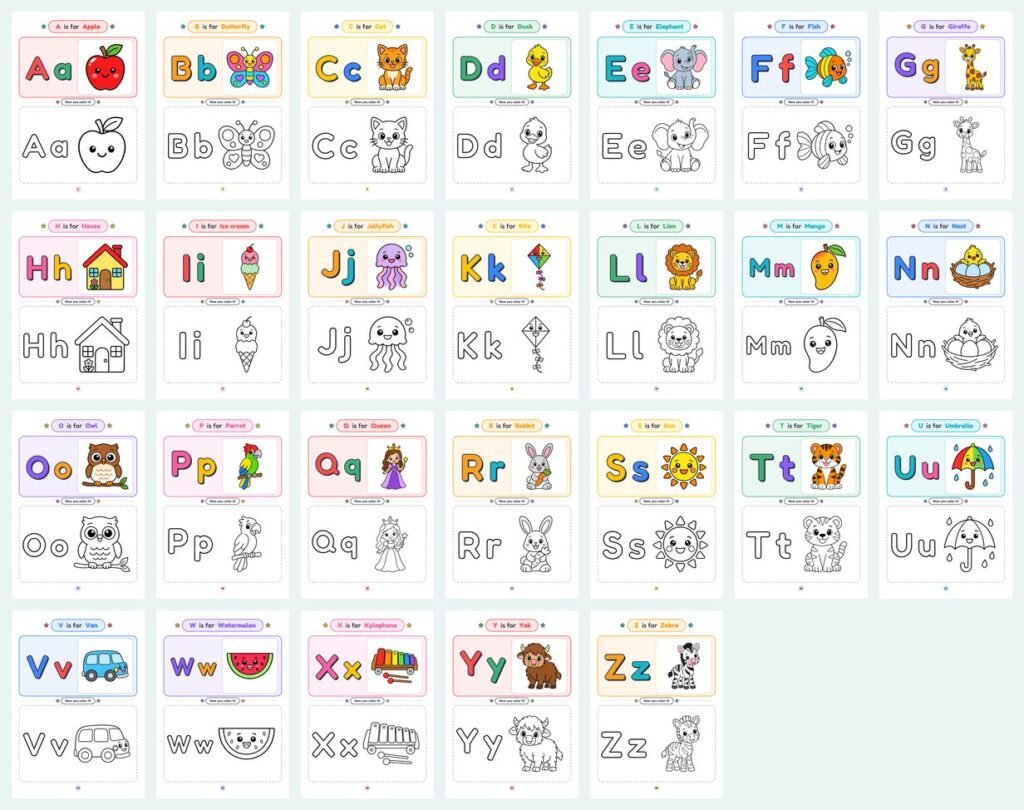
Why coloring pages help children learn letters
- They link shape, sound and picture. Coloring a big A next to an apple connects the shape of the letter with its sound and a word your child already knows.
- They slow children down. Coloring inside a thick letter outline makes a child look closely at its lines and curves for several minutes.
- They build pencil control. Holding a crayon and staying near the lines works the same small hand muscles children later use to write.
- They feel like play. Young children happily color for much longer than they would sit through a flash-card drill.
What you need
- A printer and A4 or US Letter paper
- Crayons, colored pencils or washable markers
- A folder to keep finished pages in order
- The free ABC Alphabet Coloring Book PDF (29 pages, one page per letter)
A 10-minute routine for each letter
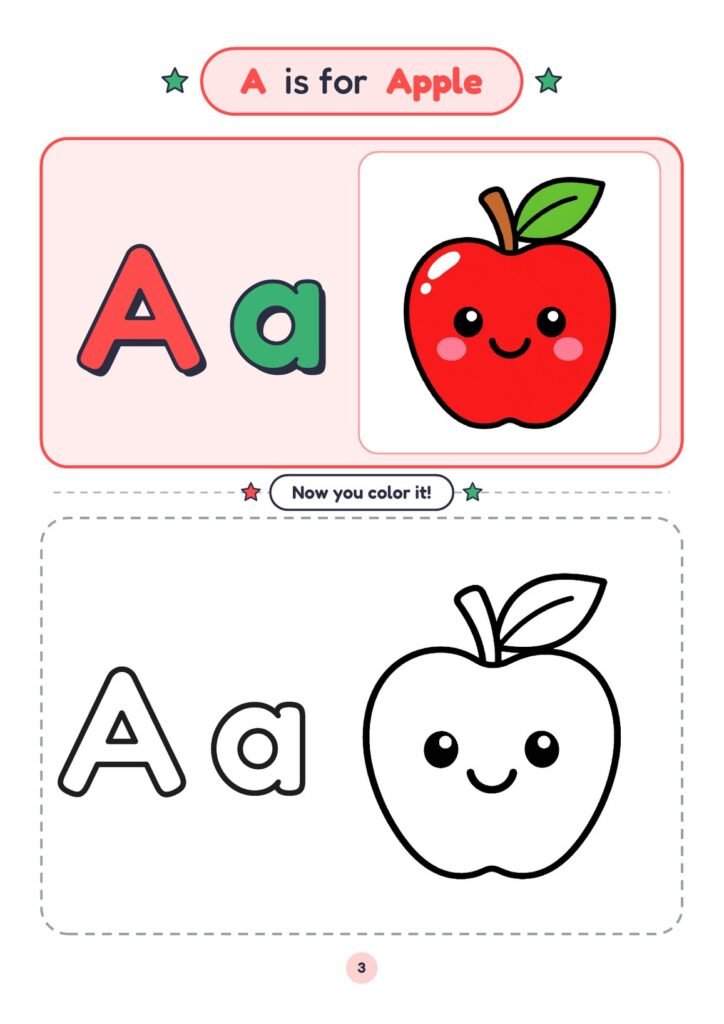
- Show the page. Point to the colorful example at the top: this is big A and small a.
- Say the sound. Say the letter name, its sound and the picture word together a few times: A, a, apple.
- Go on a letter hunt. Find two or three things in the room that start with the same sound.
- Trace with a finger. Let your child trace the outline letters at the bottom of the page before coloring.
- Color. Color the outline letters and picture, copying the example at the top or choosing new colors.
- Add it to the folder. Keeping pages in order shows progress, and older pages make a quick review.
The 26-day alphabet plan
Each row matches a page in the free ABC coloring book. The activity takes two or three minutes and works well before or after coloring.
| Day | Letter | Picture | Quick activity |
|---|---|---|---|
| 1 | A a | Apple | Count real or drawn apples, then take a bite. |
| 2 | B b | Butterfly | Flap your arms like butterfly wings five times. |
| 3 | C c | Cat | Meow softly, then stretch like a cat. |
| 4 | D d | Duck | Waddle across the room and quack. |
| 5 | E e | Elephant | Swing one arm like a trunk and stomp. |
| 6 | F f | Fish | Make fish lips and swim around the table. |
| 7 | G g | Giraffe | Stretch up as tall as a giraffe. |
| 8 | H h | House | Point to the door, windows and roof of your home. |
| 9 | I i | Ice cream | Name your favorite ice cream flavor. |
| 10 | J j | Jellyfish | Wiggle your fingers like jellyfish tentacles. |
| 11 | K k | Kite | Run with your arms out like a flying kite. |
| 12 | L l | Lion | Give your loudest friendly lion roar. |
| 13 | M m | Mango | Say what color a ripe mango is. |
| 14 | N n | Nest | Build a nest with a pillow and a blanket. |
| 15 | O o | Owl | Make big round owl eyes with your fingers and hoot. |
| 16 | P p | Parrot | Repeat a word back, just like a parrot. |
| 17 | Q q | Queen | Make a paper crown and walk like a queen. |
| 18 | R r | Rabbit | Hop like a rabbit five times. |
| 19 | S s | Sun | Draw a big sun with rays in the air. |
| 20 | T t | Tiger | Count the tiger’s stripes on the page. |
| 21 | U u | Umbrella | Open and close an umbrella, or pretend to. |
| 22 | V v | Van | Say vroom and drive a toy car along the table. |
| 23 | W w | Watermelon | Find something green and something red in the room. |
| 24 | X x | Xylophone | Tap a beat on a table or a pot. |
| 25 | Y y | Yak | Shake a scarf like a yak’s shaggy coat. |
| 26 | Z z | Zebra | Count the black and white things you can see. |
On day 27, write your child’s name on the Well Done certificate at the back of the book and celebrate finishing the whole alphabet.
Tips by age
- Age 3: Focus on the letter name and the picture. Coloring outside the lines is fine. Two or three letters a week is plenty.
- Age 4: Add the letter sound and the letter hunt. Ask your child to point to the capital letter, then the small letter.
- Ages 5 to 6: After coloring, ask your child to write the letter once on a separate sheet and name another word that starts with it.
Printing tips
The book is A4. On US Letter paper, choose Fit to page in your print settings so nothing is cut off. The coloring outlines are pure black, so you can print in black-and-white mode to save ink; the color example at the top will simply come out gray. For more ink-saving ideas, see our guide on how to print coloring pages at home without wasting ink.
When your child has finished Z, the free Animal Coloring Book is a nice next step.
Frequently asked questions
How long does it take to teach the alphabet with this plan?
26 days if you do one letter a day, or about five weeks if you only do letters on weekdays. Many children need a second round to remember every letter, which is completely normal.
Should I teach capital or lowercase letters first?
Showing both together works well, because children see from the start that A and a are the same letter. Most words children see in books are lowercase, so give the small letter plenty of attention.
What is the best age to start alphabet coloring pages?
Most children are ready around age 3, when they can hold a crayon and enjoy naming pictures. Children up to about 6 still benefit, especially for practicing letter sounds.
Are these alphabet coloring pages free?
Yes. The ABC Alphabet Coloring Book from Welcome Traders is a free 29-page PDF with no sign-up. It includes a name page, 26 letter pages from A to Z and a Well Done certificate.
Can I use the pages in a classroom?
Yes. Teachers can print copies for their own students. Please do not resell the file or share it on other websites.
Get the free ABC Alphabet Coloring Book
29 printable pages: one for every letter from A to Z, a name page and a Well Done certificate. No sign-up needed.
Further reading
- Alphabet knowledge. Reading Rockets. Why letter knowledge matters for early reading, and how to teach it.
- Developmental milestones. CDC. Milestone checklists from 2 months to 5 years, including hand and finger skills.