Planning a Low-Prep Bilingual Vocabulary Week
Running a bilingual vocabulary week in an elementary or early childhood classroom does not require expensive dual-language workbooks or complex subscriptions. Printable line art creates a low-stress environment where young learners easily connect new terms with visual imagery. When students color an object while hearing and seeing its name in two languages, vocabulary retention improves dramatically.
This 5-day lesson framework relies on free printable pages, simple routine switches, and active peer participation. Whether you teach English language learners, early dual-immersion classes, or a standard classroom introducing a second language, these activities fit into standard 20-minute daily blocks.
The 5-Day Vocabulary Week Schedule
To keep students engaged, group your target vocabulary into clear daily themes. Focus on 5 core nouns and 3 descriptive adjectives or action verbs each day, totaling 40 new or reinforced terms by Friday.
| Day | Daily Theme | Printable Resource | Focus Target |
|---|---|---|---|
| Monday | Land Animals & Sounds | Animal Line Art | 5 Animal Nouns + 3 Action Verbs |
| Tuesday | Fruits & Descriptors | Fruit Line Art | 5 Fruit Nouns + 3 Flavor/Color Words |
| Wednesday | Ocean & Marine Life | Ocean Life Line Art | 5 Sea Nouns + 3 Movement Verbs |
| Thursday | Flowers & Garden Colors | Garden Line Art | 5 Plant Nouns + 3 Sensory Adjectives |
| Friday | Review & Gallery Walk | Completed Student Sheets | Full Weekly Vocabulary Match |
Using consistent printables across the week gives students a predictable structure. They know exactly where to find text labels, where to color, and how to organize their folder at the end of each session.
3 Classroom Activities for Dual-Language Learners
Integrating coloring pages into vocabulary instruction works best when pairing visual art with auditory and written reinforcement. Here are three tested classroom routines to implement throughout the week.
1. Dual-Labeling Printables
Before handing out coloring sheets, add double-line text boxes at the bottom of each page or right next to the illustration. Write the primary language on the top line and the target language on the bottom line using dotted tracing fonts.
For example, when using pages from the Animal Coloring Book, print “Elephant / Elefante” or “Lion / الأسد” beneath the picture. Have students trace both words with a colored pencil before they begin shading the animal. This builds print awareness and connects spelling patterns across both languages.
2. Color-by-Word Audio Prompts
Turn standard coloring time into a listening comprehension game. Instead of giving instructions in a single language, call out dual-language prompts for specific sections of the page.
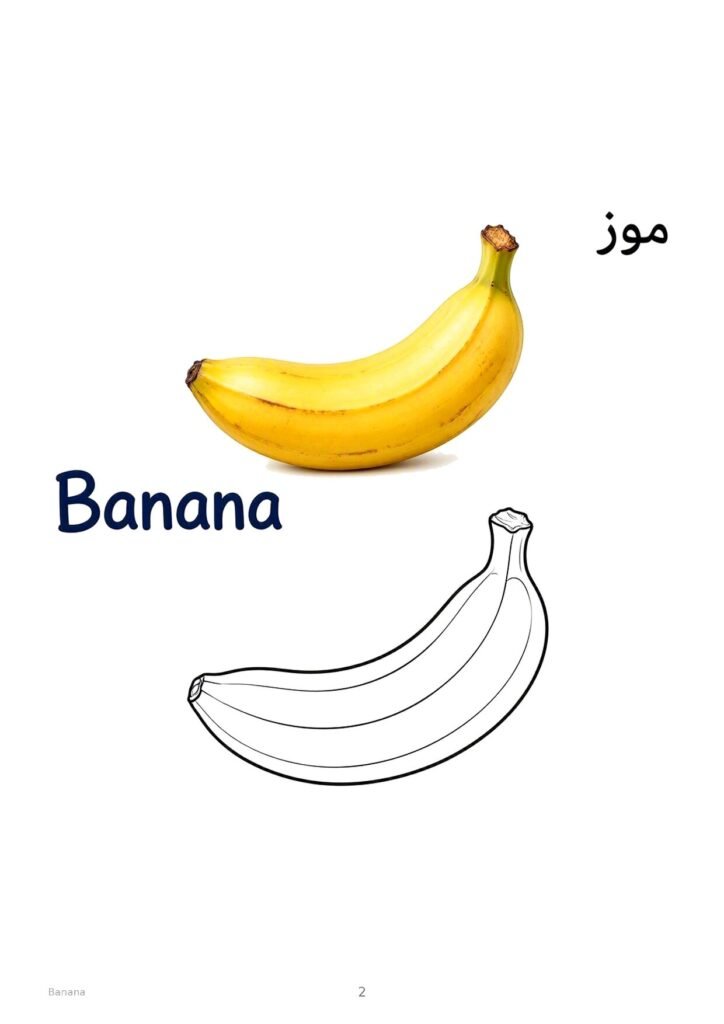
Using sheets from the Fruits Coloring Book printable pages, say: “Color the apple / la manzana red!” or “Color the banana / banana yellow!”. Students repeat the target word in both languages out loud before picking up the correct crayon. This active repetition solidifies pronunciation while building immediate visual comprehension.
3. Classroom Gallery Walk and Speaking Station
On Friday morning, transform your classroom walls into an interactive vocabulary gallery. Tape each student’s favorite completed sheet from the week around the room at eye level.
Divide the class into pairs. Have one student act as the tour guide, pointing to pictures and saying the vocabulary words in the primary language, while their partner responds with the target language word. After three minutes, swap roles. This movement-based exercise gives every child low-pressure speaking practice.
“Combining tactile activities like coloring with dual-language auditory cues removes anxiety for emergent bilingual speakers, allowing them to absorb new vocabulary at their own pace.”
Preparation and Printing Strategies for Teachers
Classroom budgets are often tight, and printing hundreds of pages for a single theme week can feel overwhelming. Planning your print jobs strategically keeps paper use low and organization simple.
Batch Printing Without Extra Waste
Print two activity pages per standard sheet of paper whenever possible. Half-page printables save paper, fit neatly into student notebooks, and take less time for young children to color completely during short 20-minute blocks.
If you are exploring marine themes, select 5 key pages from the Ocean Life Coloring Book sheets and print them as a 5-page mini-booklet. Staple the left edge so each student receives a compact vocabulary booklet on Monday morning.
Involving Parent Volunteers and Native Speakers
If you have bilingual parents or community volunteers, invite them to record 30-second audio snippets of the weekly word lists on a smartphone or classroom tablet. Place QR codes linked to those audio clips directly on the printed coloring sheets.
During independent center time, students can scan the code with a tablet, listen to the native pronunciation, and color their page accordingly. This extends learning without requiring constant direct teacher oversight at every station.
Free Resources for Your Next Classroom Theme
Creating an enriching dual-language environment does not require complex lesson software or costly workbooks. Simple, well-designed printable coloring pages allow children to learn through visual association, fine motor control, and active speaking games.
Explore the completely free collections at Welcome Traders Store to stock up for your upcoming lesson plans. You can download our full range of printable animal sheets, fruit books, and ocean life activity pages instantly with no sign-up, no registration, and no download limits.
Free downloads for this topic
- Free printable coloring pages (no sign-up)
- Banana coloring page
- Tai Chi Walk: The Complete Beginner's Guide to Walking Meditation & Gentle Daily Movement (eBook)
Further reading
- Learning more than one language. American Speech-Language-Hearing Association. Advice for families raising children with two or more languages.